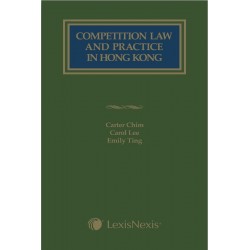
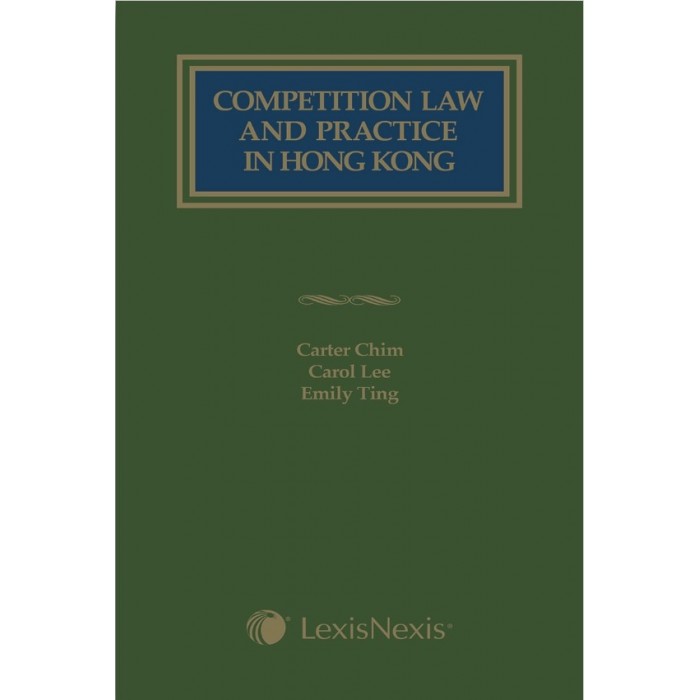
Competition Law & Practice in Hong Kong is a practitioner work on the Competition Ordinance (Cap. 619) that takes the Ordinance and Hong Kong authority as its starting point rather than the EU/UK competition jurisprudence. A decade after the Ordinance came fully into operation, Hong Kong has its own body of Competition Tribunal and appellate jurisprudence, and that jurisprudence has begun to diverge from the European model on which the legislation was drawn. This book states the Hong Kong position, with a foreword by the Hon Mr Justice Jonathan Harris, President of the Competition Tribunal.
The Hong Kong regime is structurally unlike the regimes most practitioners are trained on. Enforcement is judicial rather than administrative. Following Competition Commission v Nutanix Hong Kong Ltd [2019] HKCT 2, enforcement proceedings are treated as involving the determination of a criminal charge for the purposes of articles 10 and 11 of the Hong Kong Bill of Rights, with the consequence that contraventions must be proved beyond reasonable doubt. There is no stand-alone private right of action. Merger control reaches only carrier licensees under Schedule 7. Each of these features changes the answer to questions that are settled elsewhere, and none of them can be resolved by reference to European or English materials.
That divergence is no longer theoretical. In Competition Commission v Gray Line Tours of Hong Kong Ltd(No 2) [2026] HKCT 1, the Tribunal held that the First Conduct Rule does not extend to standalone facilitation, that a facilitator must be pursued under section 91, and that the relevant EU/UK law does not assist in a statutory scheme which makes separate provision for involvement in a contravention. The Commission's claim against the hotel respondents was dismissed and costs followed. The book analyses that decision and the accessorial and inchoate liability provisions of section 91 by reference to the Australian legislation from which section 91 was taken, questions to which there is no European answer.
The work covers both substance and procedure: the First and Second Conduct Rules; exclusions, exemptions and block exemption orders; applications under sections 9, 15 and 24; the merger rule; the undertaking concept and parental liability; liability of persons involved in a contravention; investigation and enforcement by the Competition Commission, including leniency, cooperation, commitments and warning and infringement notices; proceedings in the Competition Tribunal, including pecuniary penalties, director disqualification and costs; private enforcement; and reviewable determinations under Part 5.
Comparative material from the European Union, the United Kingdom, Australia and the United States is used critically and transparently throughout. The book identifies when comparative authority is persuasive, why it may be relevant, and where Hong Kong's constitutional structure, statutory language or developing jurisprudence requires a different answer. It also confronts questions that remain unresolved, including the relationship between serious anti-competitive conduct and restrictions by object, the constitutional position of the penalty regime as it applies to natural persons, and the consequences of the criminal standard for inference, presumption and the use of economic evidence.
The book is written for:
• Barristers, solicitors, in-house counsel and competition law advisers.
• Judges, tribunal members, regulators and public law practitioners.
• Businesses and compliance professionals operating under the Ordinance.
• Academics and students requiring a rigorous account of Hong Kong competition law.